
That Time I Did a TED Talk (part 3)

And then it was time. And I got dressed in my pretty green dress, and I wore my rainbow shoes… and put on some makeup and TINTED glasses. Brad came with me, and sat in the audience. Brit-brit mic in place, I was lead to the stage, and awaited my introduction.

And began talking.

And we had a post interview on the Texas State TEDx Instagram page while I was still flying high from the talk.

Can you tell I’m still REALLY REALLY hyped?

And… then we waited for the videos to get processed… which took a lot longer than we thought it would because of the STUPID TEXAS ICE STORM… and eventually… it was on YouTube and I shared it with everyone I thought would want to see it.

The Aftermath

Nothing huge happened.
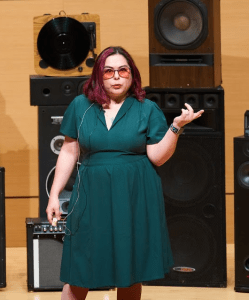
me in the middle of schooling people.
  • I’m not internet famous.
  • I posted the video in Reddit and Discord in the Autism groups I originally polled to get some feedback, and got some good constructive criticism.
  • I didn’t “win TEDx,” nor did I get my requested audience with the First Lady.
  • I’m still working at the University.
  • I finished the JEDI (Justice Equity Diversity and Inclusivity) training and got my Mental Health First-Aid certification.
  • I also joined the Advocates for Neurodivergence at Texas State (ANTS) group as a mentor/ally (since it’s a student group) and offered my office as a “safe space,” for when people might need quiet/dark. Because I know that sometimes you need that, and we don’t have a lot of those places on a busy campus.

I put off applying for a PhD program and getting my doctorate for a year, until I figure out my life post-pandemic. But I still kind of want to do it. I really missed the research and writing. It scratches an itch in my head that I just can’t get to otherwise. Even so, I want to get at least one kid graduated from college before I start doing my own thing.
That Time I Did a TED Talk (part 2)

As you might imagine, researching autism when you are yourself autistic is kind of a strange thing. But I jumped into the research pool with every intention of plucking only the best bits of research to use in my talk. And… ended up with WAY too much information to do in a 10 minute talk.

The TEDx peeps at our university assigned me a “coach,” who would be helping me with culling down my talk from the one hour lecture I had planned to the expected 10 (or so) minute talk. Mark was (and is) wonderful. A professor in the Communication department, I fully expected to be told to tone down my personality and be more academic. I WAS MISTAKEN.

“You need to show MORE personality!” He would exclaim, “that’s why we loved your video! Who starts a talk with ‘why have mild autism when you can have SPICY autism?‘ YOU, that’s who!”

“I’m not sure you know what you’re asking for…. I can get really animated when I’m excited about something.”

“That’s what we want. It’s easier to tone you down than get you to move more. Use those hands! Keep that deadpan humor! It’s so good; it’s authentic.”

Mark-to me during the practice sessions

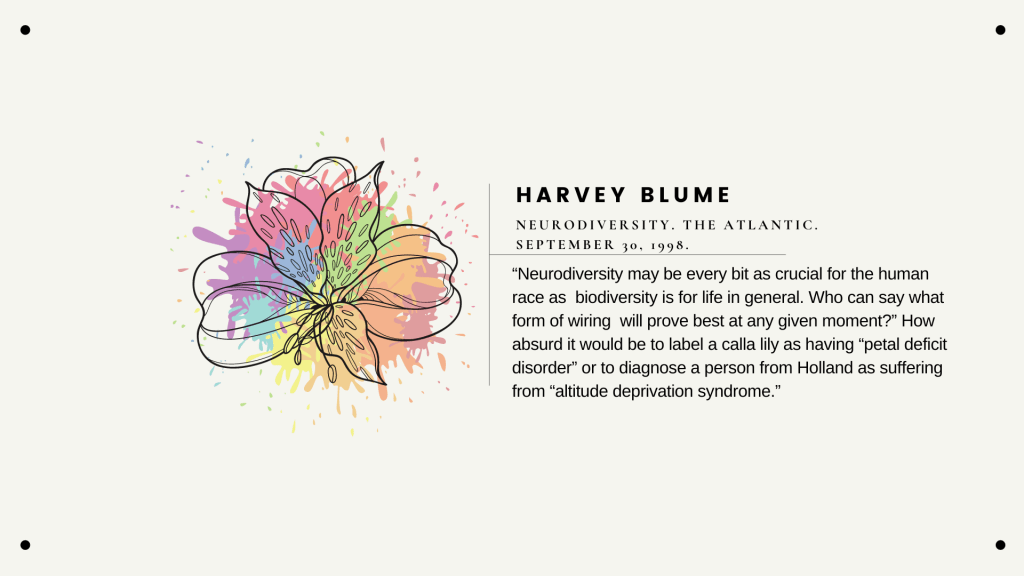
Eventually, I got the hint and became more comfortable in my talking. Because I was essentially immersed in books on the pedagogy of teaching online as well as the needs of people with disabilities in a classroom setting, I only needed to reference my slides when I was directly quoting. My personal favorite….

Harvey Blume explaining why Neurodiversity is important.

I was forced to condense some of (what I considered) to be more important facts, like the timeline of accommodations for students with “special needs” within federally funded schools, but I was able to stress that the changes that stemmed from the first few cases where student’s families had to sue the school districts for access… had only begun in my lifetime. And in reality, it’s only been since I graduated high school that real and meaningful change began to exist in education.

Practicing

Because of Covid 19—the whole point of the talk—there was no audience. Not only that, we had to use air-cleaners between people to ensure that everyone in the room (and we were severely limited on that) would be safe. This meant that even though we, as speakers, would still be expected to play to the house… there was no house*. Instead, we would talk to our plus-one as well as a spattering of people taking pictures, filming, and of course… our coach.

The rehearsal was the first time we, as speakers, got to see the space and use it.

The next day would be…. the TALK.